

Research,
evidence &
impact
Our company was founded based on a research project, and we have always maintained close ties with the research world as our founder started there +15 years ago, and holds a PhD in games and learning.
We avoid reinventing the wheel, and have always prioritized to push the field forward through extensive participation in research projects to advance the understanding of games, learning and change.
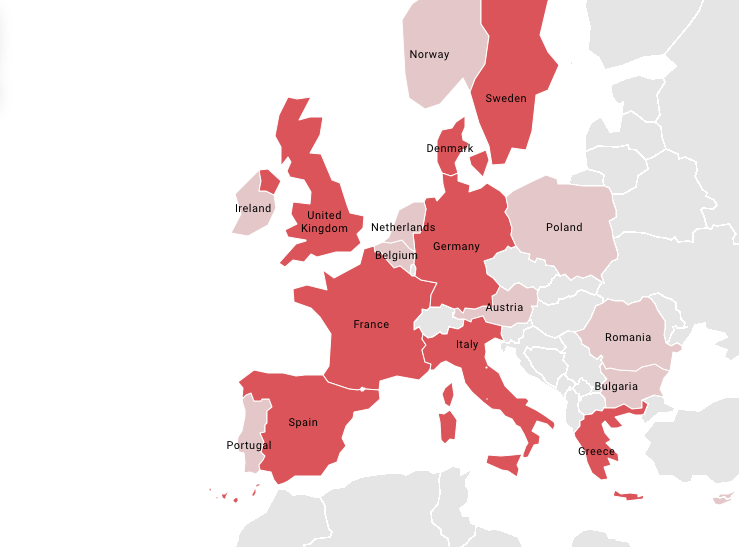
Over the years we have been part of 10+ major EU research projects, and worked with many partners including 50+ leading universities mostly across EU (eg. Fraunhofer IGD (DE), Chalmer (SE), University of Agder (NO), DTU (DK), Deusto (ES), National Technical University of Athens (GR), University of Nottingham (UK), University of Ljubljana (SL), Universida Politecnica de Madrid (ES) and City University of London (UK).
International Research Projects
..focus on the learning content and less on the visual design. When a narrative is important, consider to integrate it with the learning content. Apply instructional support to foster cognitive skills and the acquisition of knowledge rather than to stimulate in-game performance.
Wouters and Oostendorp
(2013)
Dilemma-based-learning
We have been involved in a number of research projects in this area spanning. In the GREAT Project the aim is to demonstrate that games have a positive impact on social engagement and create a new form of dialogue between citizens and policy stakeholders. By exploring the innovative potential of a games, citizens will be able to express their preferences and attitudes on policy issues. We use our own platform DiBL as the starting point.
Cyber security
We have worked with security both in research projects and with companies, and have built up high expertise in the domain over the last years both for basic security for all employees, and professionals in the area. Check out the SPIDER project below, and the new CyberSecPro, where we continue the work on a RxB simulation game.
GREAT
CyberSecPro
GameD
Circularity, Waste & Climate
We have been involved in a number of research projects in this area spanning the climate crisis, circularity, waste management and water consumption, where we harness the potential of games to both engage, educate and change. Check out the Waste4Think project below.
Gamified introduction to Gaming
The project will teach Dilemma-based learning (DBL) to Greek school teachers. DBL promotes learning by having students discuss and take decisions within specifically designed case studies. In particular, Europass Teacher Academy will train a group of Greek teachers from the Peloponnese region to implement DBL in their classroom.
Advanced materials
AMASE support teachers to bridge the gap between advanced technologies in the real world and STEM education in the classroom for students from 12-18 years old. We enable the students to transfer STEM knowledge from the classroom into the real world of scientific research & technology and vice versa and hence enhancing the motivation of students for choosing STEM related subjects
Waste4Think
GiG
AMASE
Selected Research Publications
- Egenfeldt-Nielsen, S. (2019). Serious Games and Gamification: When Entertainment is not enough In: Egenfeldt-Nielsen, S, Smith, J. & Tosca, S. (2019). Understanding Video Games: The Essential Introduction – 4th Edition. Routledge.
- Kampf, Ronit (2016). Long-Term Effects of Computerized Simulations in Protracted Conflicts. The Case of Global Conflicts. UNESCO.
- Egenfeldt-Nielsen, S. (2011). What makes a good learning games? Going beyond edutainment. eLearn Magazine.
- Egenfeldt-Nielsen, S. (2007). Educational Potential of Computer Games. Continuum.
Supported by
